

How to Clean Laser Engraved Glassware Without Damage
Quick Summary
To clean laser engraved glassware, first brush off loose dust with a dry cloth, then rinse with warm water and wipe the engraved area with a damp, lint-free cloth and mild dish soap. Rinse again with plain water and dry. Never scrub the engraving or use hot water.
- Brush away loose dust with a dry microfiber cloth before any water touches the glass.
- Use warm, not hot, water, since hot water can thermal-shock thin or stressed glass.
- Choose a plain, dye-free dish soap and avoid grease-cutting or bleach formulas.
- Rinse with plain warm water until it sheets off evenly, so no soap film is left behind.
- Handwash engraved glass rather than using the dishwasher, as the product listing advises.
Table of Contents
- Identifying the Residue on Your Engraved Glass
- How to Clean Glass After Laser Engraving, Step by Step
- How to Remove Residue After Laser Engraving
- Dishwasher Safety for Laser-Engraved Glass
- Booking a Replacement or Custom Piece From SignatureME Designs
- Frequently Asked Questions
Identifying the Residue on Your Engraved Glass
Before you clean laser engraved glassware, figure out what you are removing. Laser engraving on glass usually leaves a fine, frosted white mark and sometimes a faint film of soot or dust.
Look at the engraved area in good light. A chalky or frosted look is normally the etched glass itself, which is part of the design.
- Dust and debris: Fine powder that wipes away with a dry cloth.
- Soot or smoke marks: Dark grime that needs warm water and mild soap.
- Oils and fingerprints: Greasy film that responds well to a little dish soap.
Start with the gentlest option. You can always step up if the first method does not work.
How to Clean Glass After Laser Engraving, Step by Step
Cleaning glass after engraving takes about five minutes if you work in the right order. The sequence below is built around one principle: remove loose material first, then dissolve the film, then rinse everything off food-contact surfaces. Skipping the order is the most common reason people scratch the surface or leave a haze behind.
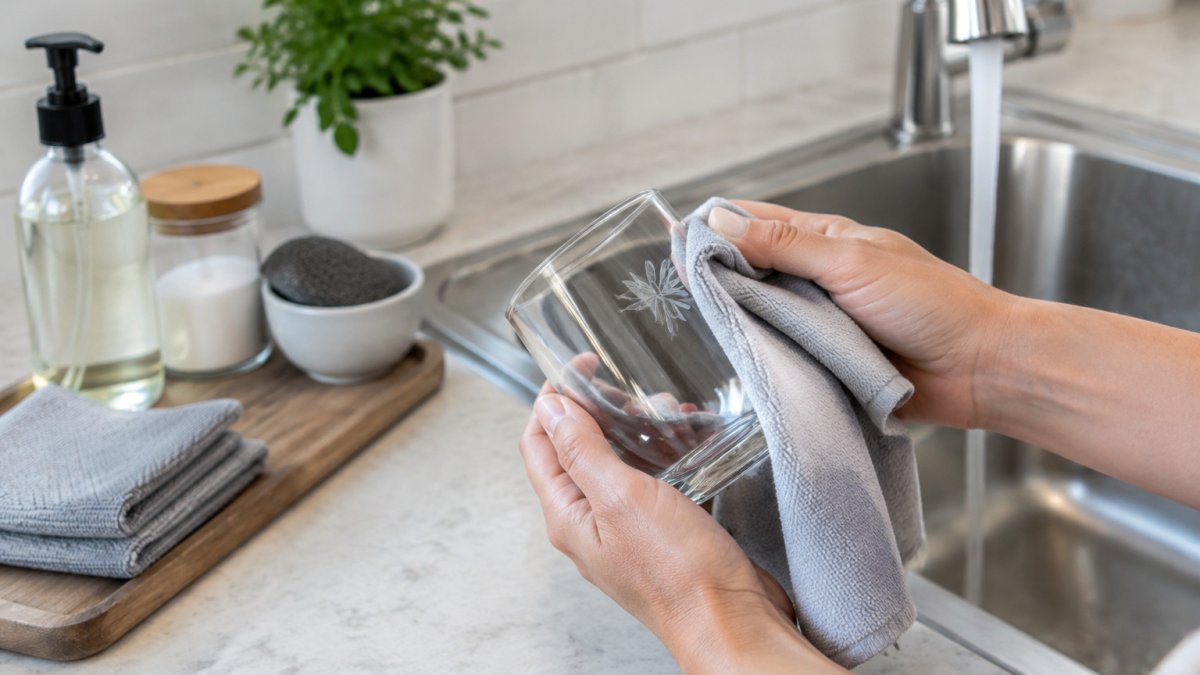
- Dry-brush the loose dust first. Before any water touches the glass, wipe the engraved area with a dry microfiber cloth or a soft, dry toothbrush. Wetting loose dust first can turn it into a thin slurry that is harder to remove.
- Rinse with warm water only. Hold the glass under warm, not hot, running water to float away the remaining dust. Hot water can thermal-shock thin or stressed glass, and it does nothing extra for dust.
- Mix a mild dish soap solution. Add a few drops of a plain, dye-free dish soap to a bowl of warm water. Avoid anything labeled 'heavy duty,' 'grease-cutting,' or 'with bleach', those formulas are more aggressive than an etched surface needs.
- Wipe with a soft, lint-free cloth. Dip a microfiber or lint-free cloth, wring it out until it is damp rather than dripping, and wipe the engraved area in light circles. A dripping cloth pushes water into the frosted texture and slows drying.
- Work the engraved area, not around it. The etched zone is slightly rougher than the surrounding glass, so grime collects there. Use small circular motions over the engraving itself rather than broad sweeps across the whole piece.
- Rinse with plain warm water. This step matters more than most people think for drinkware. Soap residue left in the frosted texture can leave a cloudy look and, on a drinking glass, a film that touches the rim. Rinse until the water sheets off evenly with no slick feel.
- Dry with a clean, lint-free cloth and check in raking light. Hold the glass up so a light source skims across the surface at a low angle. Raking light reveals film and lint that a straight-on look hides.
If a film remains after step 7, repeat steps 3 through 6 once. Do not scrub harder to speed things up, pressure, not soap, is what scratches etched glass.
Watch out: Never put an engraved drinking glass straight from the sink into a hot dishwasher or a rack of hot water. The sudden temperature change is the classic cause of a cracked tumbler, and it has nothing to do with the engraving itself.
Choosing a Mild Cleaner and Tools
Use the least harsh option that works, and match the cleaner to the residue you identified above. For most residue, these are enough:
- Mild dish soap and warm water: Your first choice for soot, dust, and everyday fingerprints.
- Baking soda paste: A small amount mixed with water on a soft cloth helps with stubborn spots. Keep it to a paste, not a powder, dry baking soda is mildly abrasive.
- Rubbing alcohol on a cloth: Good for oily film and adhesive residue, used sparingly and rinsed off afterward. Do not soak the glass in it.
Keep your tools soft. A microfiber cloth, a lint-free cloth, or an old soft toothbrush works well. Skip steel wool, scouring pads, melamine 'magic' erasers, and anything labeled abrasive, those cut into the frosted texture and leave permanent cloudy patches.
Cleaning the Engraved Area Without Scratching It
The engraved area is the part most likely to get damaged.
Work with a soft cloth and light pressure.
A common mistake is reaching for a sponge with a scrubby side.
Watch out: Do not use a glass stovetop cleaner or a cerium-oxide polishing compound on an engraved design.
The cleaning sequence is easier to follow at a glance, with the time and care for each step.
| Step | What to do | Note |
|---|---|---|
| 1. Dry-brush | Wipe loose dust with a dry microfiber cloth or soft toothbrush | Do this before any water touches the glass |
| 2. Rinse | Warm (not hot) running water | Hot water can thermal-shock thin glass |
| 3. Soap solution | A few drops of plain, dye-free dish soap in warm water | Avoid grease-cutting or bleach formulas |
| 4. Wipe | Damp (not dripping) lint-free cloth, light circles | Dripping cloths push water into the texture |
| 5. Engraved area | Small circular motions over the engraving | Etched zone traps grime and shows scratches |
| 6. Rinse again | Plain warm water until water sheets off evenly | Soap residue causes cloudy look and rim film |
| 7. Dry and check | Dry with lint-free cloth, inspect in raking light | Reveals film and lint a straight-on look hides |
How to Remove Residue After Laser Engraving
Residue from the engraving process is usually easier to remove soon after the piece is made. Dust and soot can be harder to remove if the glass is left sitting for a long time. The key is to identify what you are removing before you pick a method, because the wrong cleaner can set a stain instead of lifting it.
Identify the residue first
- Glass dust and soot: A dry, gray-to-black powder or smudge that wipes away with a dry cloth. This is the most common residue and the easiest to remove. Clean it dry before wetting it.
- Frosted white mark: This is usually the etch itself, not residue. If it does not lift with a dry cloth or a soapy wipe, stop, you are looking at the design.
- Paint or marking-compound residue: A colored or opaque film left by layout fluid, paint fill, or a marking pen. It often needs a solvent, not soap. Test rubbing alcohol on a hidden spot first, then wipe the engraved area with a cloth dampened with alcohol and rinse thoroughly.
Removal sequence for stubborn residue
- Soak a soft cloth in warm soapy water and hold it on the spot for a minute to soften the residue.
- Gently wipe in one direction, then rinse.
- If a film remains, dab a tiny amount of rubbing alcohol on a cloth and wipe once.
- Rinse again with plain warm water and dry completely.
- Check in raking light before deciding whether to repeat.
Watch out: Strong solvents, oven cleaners, and abrasive powders can cloud or permanently mark glass. On any piece that will touch food or drink, rinse with plain water until the surface no longer feels slick, and never leave an alcohol or solvent film on a rim or interior.
Match the method to the glass type
- Ordinary clear glass: The full soap-and-water workflow above is safe.
- Coated, colored, or mirrored glass: Mild soap and water only; skip alcohol and vinegar on the decorated surface.
- Crystal and lead glass: Handwash with mild soap and warm water, and avoid sudden temperature changes and dishwasher detergents, which can dull the surface over time.
Clean up during engraving to make this easier
Cleanup is often faster when residue is managed at the laser. Covering the glass with masking film or transfer tape, using a low-tack marking compound, and wiping the piece down within an hour of engraving all reduce how much soot and adhesive ends up in the frosted texture. If you engrave regularly, keep a dry microfiber cloth and a small bowl of soapy water at the machine so the first wipe happens before residue sets.
Dishwasher Safety for Laser-Engraved Glass
Many people wonder whether engraved glassware can go in the dishwasher. The safe answer is to check the care instructions that came with your piece first.
Hand washing protects the engraving. For more practical tips on keeping engraved gifts looking good over time, see engraving durability tips that last.
If you are unsure about a piece, handwash it. Your engraved glass will look sharp for much longer.
Booking a Replacement or Custom Piece From SignatureME Designs
Glassware gets dropped, chipped, or worn over time, and sometimes you want a fresh design for a special occasion. At SignatureME Designs, our glass tumblers are handmade, so it is worth planning ahead when you order.
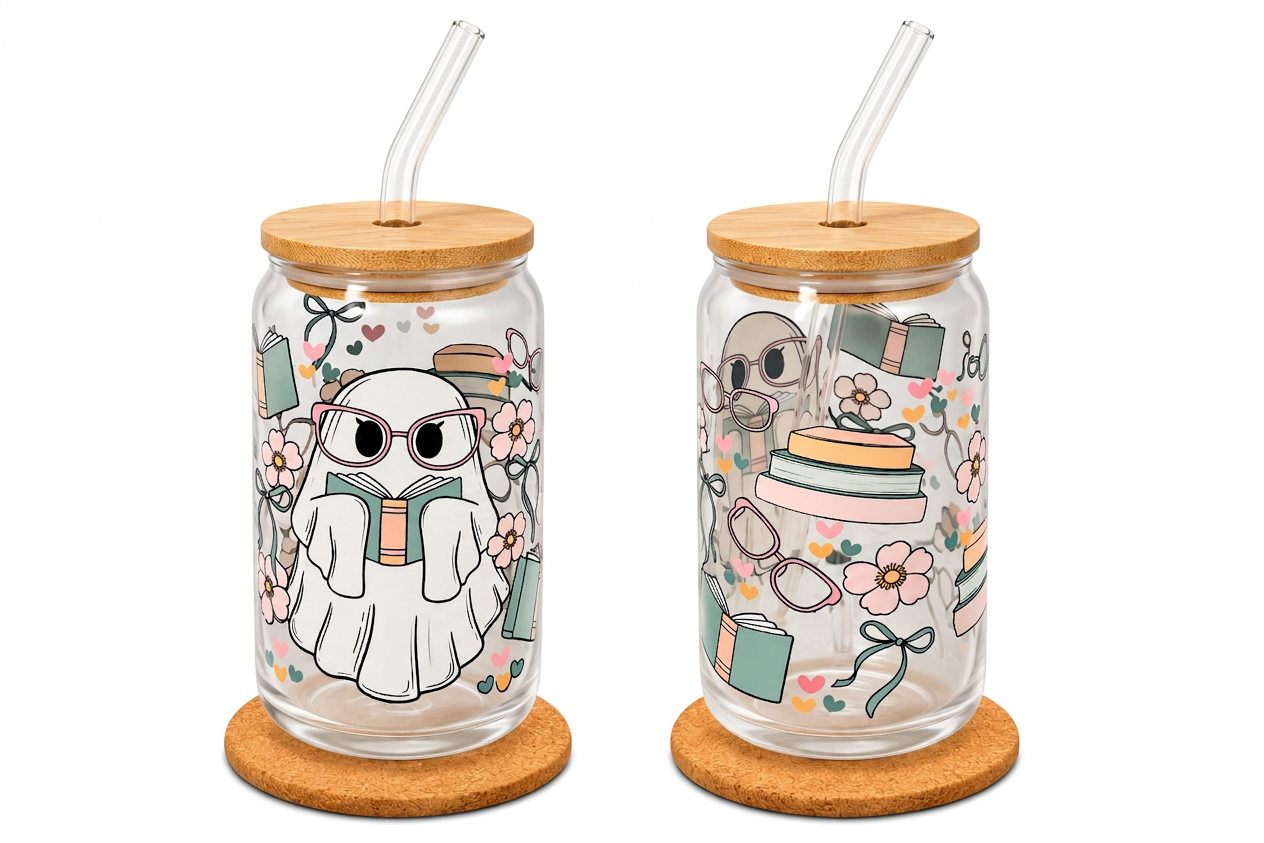
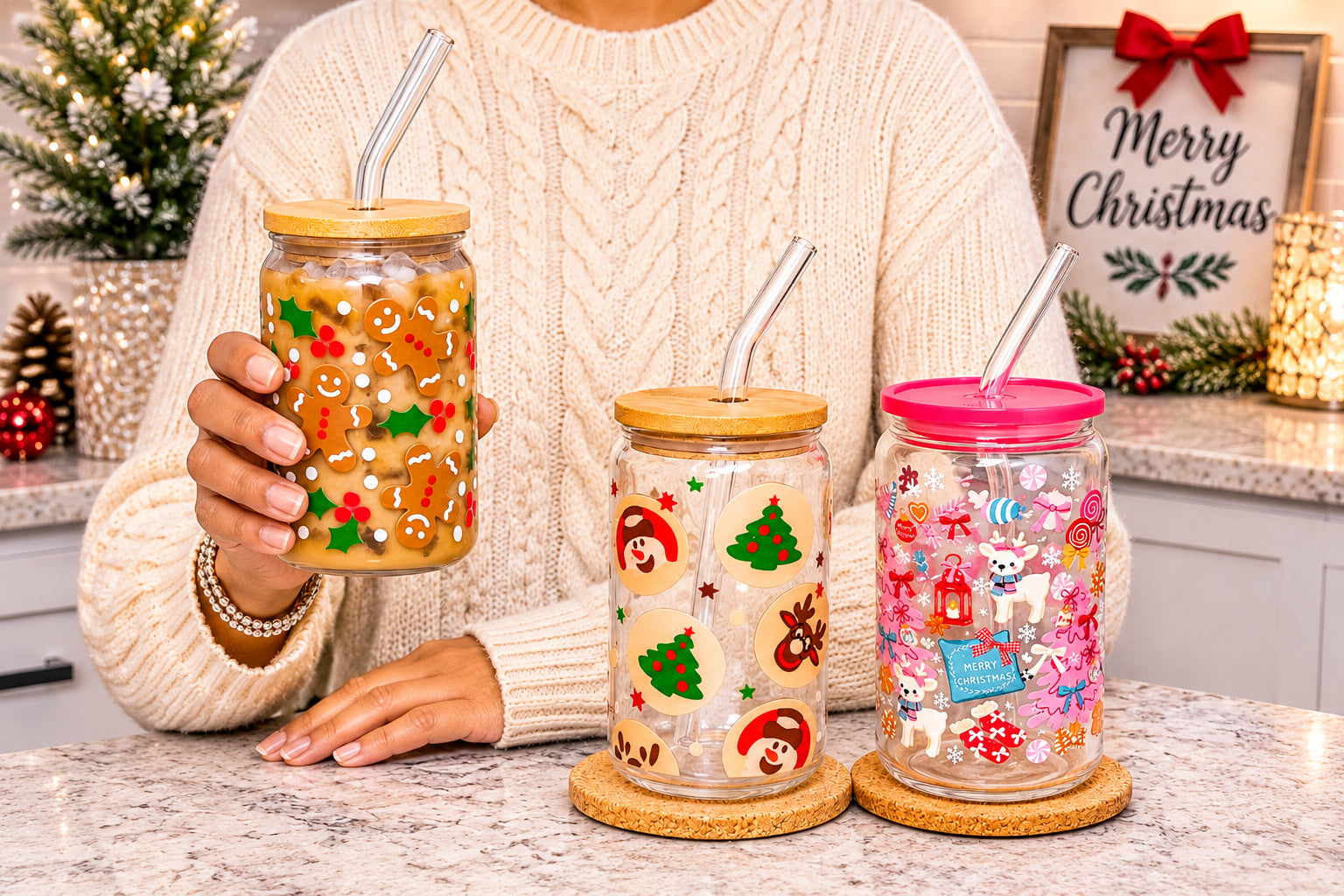
If you need a replacement, you can browse our everyday glass tumblers for daily use. For seasonal gifts or a holiday refresh, our Christmas glass tumblers and Fall glass tumblers are a good place to start.

Frequently Asked Questions
How do you clean glass after laser engraving?
Rinse the glass in warm water, then wash it by hand with a few drops of mild dish soap and a soft cloth. Wipe the engraved area in gentle circular motions, following the lines of the design rather than scrubbing across them. Rinse thoroughly and dry with a lint-free cloth. Avoid abrasive pads, steel wool and hard brushes, since they can scratch the glass and dull the engraving. For stubborn soot, a paste of baking soda and water applied with a soft cloth usually lifts it without damage.
What removes residue from laser-engraved glass?
Residue from laser engraving is usually fine soot or dust, which warm soapy water removes easily. Sticky residue from masking tape or adhesive may need a small amount of isopropyl alcohol on a soft cloth, applied lightly and tested on an inconspicuous spot first. Oily residue responds well to a mild degreaser. Always rinse thoroughly afterward so no cleaner remains on a surface that will hold food or drink.
Can you wash laser-engraved glassware in the dishwasher?
Many engraved glass items are sold as hand-wash only, and that instruction matters. Dishwasher detergent is harsh, and the high heat and jostling can wear down the engraved surface over time. Handwashing with warm water and mild soap is the safest routine for keeping the design crisp. Check the care card that comes with your SignatureME Designs tumbler before deciding otherwise, and keep handmade pieces out of the dishwasher.
How do you remove paint or masking residue from engraved glass?
Soften the residue first by soaking the glass in warm soapy water for several minutes. Gently loosen the edges with a soft plastic tool or a wooden toothpick, avoiding metal blades that can scratch the glass. For leftover film, dab a little isopropyl alcohol onto a soft cloth and wipe lightly. Rinse and dry completely, then inspect the engraving under good light to confirm no residue remains.
